The Mysterious Lever

Wednesday, January 27, 2016

The Worst Game Mechanic

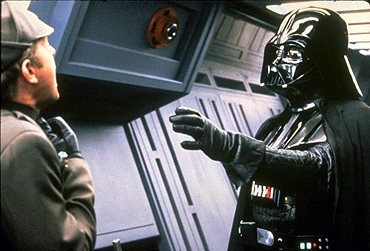
http://vignette2.wikia.nocookie.net/starwars/images/9/9a/Vaderchoke.jpg/revision/latest?cb=20070319225505Your friends have all gathered to play a game.  There are five of you, but the game is only 4 players.  Someone has to sit out, and it's randomly decided that that's you.  Ever had that feeling? It's a sinking frustration, because you can't really blame anyone but the randomness that chose you, and the game that put you there.  So you feel helplessness, and all alone.


Fortunately, this doesn't actually happen because people aren't jerks (eh, usually). They'd instead choose to play another game, because they don't want one of their friends to not play.  So why then, do so many games have mechanics that do exactly that: have people not play the game?!  The worst game mechanic in the world is any which causes a player of the game to do exactly the opposite of what a game design should strive for: having fun by playing the game.

The most simple example of this is the lose a turn mechanic.  The affected player has to sit out for a round while everyone else plays past them. That's not at all fun!  Likewise, take an extra turn is almost as bad.  This is essentially forcing everyone but one player to lose a turn.  This is almost obvious, yet game after game include it as an effect of some card, some ability, or some reward.

This gets me to the important part for RPG mechanics:
Never give a player more "actions" than another in any given "round".
Period.  I don't care about attack speeds, injuries, or status effects.  This problem can be much more subtle: an extra attack here, a bonus action there, a loss of your movement action.  An extra re-roll.  Any mechanics that lets one player play more than the other players means that one player is hogging the spotlight.  They are taking up more of everyone's time than any other player.  Even if a wizard's fireball blows up the entire room, the fighter with ten attacks will be rolling for minutes, while the wizard sits back and waits for the next day to roll around (don't even get me started on 'encounter' or 'daily' powers...).  Equally cool in terms of fiction, and even balanced in terms of power. But the bottom line is that the wizard just doesn't get to play as much as the fighter.

Major edit after a lot of people have pointed some things out to me:
This is not a major issue, if an issue at all, in most role playing games.  Extra actions can be a lot of fun - for those who get them.  But it rarely impacts the other players.  In fact, the 'human factor' is a much larger contributor to players waiting around than a player's extra actions ever are.  But these arguments don't disprove that such mechanics have a core problem.  For science, you really have to focus in and look at things individually as well as within the big picture.  Narrowed down, these mechanics have the potential to lag a game down.  In the big picture, it's only a 'real problem' when one or more factors are also put on top of it: such as that one guy who takes forever to decide what he's going to do.  The issue is multiplied if that guys is also the one that has multiple actions.

The idea behind the spotlight being equal per 'round' could in fact be drawn out over multiple sessions.  I'm perfectly okay with games that shift major spotlights game to game, especially when it's story/fiction based.  But that's not one of these mechanics that I'm talking about.  The problem is that a mechanic such as 'lose a turn' could completely destroy someone's spotlight day (e.g. they get turned to stone by a Medusa), now wasting multiple game sessions for that player, rather than just one or so rounds of a combat.

The bottom line is that these types of mechanics prevent player engagement, and that's why they are not "good".

**End Edit**

Next up is stuns.  My friends and I have a saying:  "Stuns win games".  If you've ever played a MOBA like DoTA, LoL, or HoN, you know how true this is.  But it's equally true for every other game genre as well.  When someone cannot act, cannot play the game, the other players have a 100% pure advantage.  Sure, this can be balanced (e.g. the cost of the stun is high enough to offset the time lost), but the key here is that it is not fun.  The player that is stunned gets aggravated, increased in direct relation to how long they are stunned for.  Steer clear of these mechanics, and balance your game in other ways.  For example, don't have "ice" stun - make it "slow".  Detriments are interesting; you have to play around them, usually calling for a change in strategy.  But you're still playing.
https://i.ytimg.com/vi/792qymo68XQ/hqdefault.jpg

In RPGs (and other co-op games), an important thing to remember is that when players are not against other players (e.g. a GM, cards, or computer AI), these types of mechanics are okay for the players to inflict on their enemies, because enemies aren't there to have fun.  It's not about them, it's about the players.  So have your mage freeze that dragon; just don't let the rogue sprint, jump, attack, backflip, and attack again all in the same go.

Stuns Win Games - OPifex Gaming

Mechanics that force you to not play the game you sat down to play are the worst mechanics in game design.  And there are plenty of shitty, broken, unbalanced, disruptive, un-intuitive, complex, confusing, nonsensical mechanics out there.  There are things that just don't work.  But none can top the mechanics that do exactly what they're intended to do: stop people from playing.

Another major edit, for more examples:
Companions/pets give players complete extra turns. They are doing more per turn than other characters, and I've seen plenty of games bog down to a crawl because of it.  This is generally why we don't give the same person multiple characters to play within an RPG, unless everyone also gets multiple characters.  It's hard for players to control that much - i.e. it takes too long in comparison to everyone else.

Magic: The Gathering has "take an extra turn" cards that, when stacked, can make opponents walk away from the table, because they don't want to sit and watch someone play solitaire cards for 10 minutes.

Dominion is a game where "extra actions" per turn is a core part of getting players' engines going.  But the key to dominion is that everyone starts with an equal opportunity to gain these extra actions.  The game is about that, but is not the major selling point of the game.  I'd argue that strategies that get more actions are more 'fun' to play in dominion, but that doesn't stop other strategies from also being viable/fun, because the game centers around figuring out the 'optimal' card strategy, not necessarily the turn-by-turn play.  Arguable - I know - and I'd then start to argue that the extra actions make some strategies more enjoyable than others, which isn't good game design.

Lastly, my favorite example from people's comments: there's an obvious line between a barbarian having a couple of extra swings with his axe and the druid who summons 8 great owls to control for the next six turns. The point - when it comes down to it - is to be careful with your game designs.  These types of mechanics are awesome for the player, but generally not so much for the other players.

Tuesday, January 19, 2016

Mistborn: The Big Book of "Rules Lite"

When I sat down to play Mistborn, I had skimmed the rules.  They seemed pretty light, with some uniqueness mixed with familiar concepts from games like FATE.  But from reading just the first few pages of this big RPG book, I had been sucked into the awesome world Brandon Sanderson has created, and was excited to explore the world he presents.  After playing, my opinions have been flipped dramatically.

The book, as I understand it, has quite a bit of "spoilers", so if you haven't read the books and plan to, I'm warning you now that I don't know enough to differentiate, so anything below this point could potentially give you more information than you should know.  I'm not sure whether to dock points off for this issue or not.  On the bonus side, it not only explains but expands on concepts introduced in the books, allowing followers of the series to explore the world in greater depth.  At the same time, new players (e.g. friends of people who've read the books) are given a huge amount of information, which is great, because it helps them dive into the world and join their friends in understanding how the world ticks. So the only downside is some spoilers... which I think is just fine for a 'series' RPG.

The system most closely resembles "Lady Blackbird" (which if you haven't played, you should!).  You use d6 dice pools, created with base stats plus any number of attributes and traits that may apply, giving you either bonus dice or taking some away.  However, the system of success is fairly unique: you try to get pairs of dice, with 6's being extra bonuses regardless of success.  Without going into further detail, the result of this is that the action resolution is very quick and easy to determine the outcome, while hiding the probabilities behind otherwise familiar d6s.  It seemed to work, at it's core.

However, the system has hard, artificial limits.  You can never have less than 2 dice, and no more than 10.  I generally don't like rules like this, because even though most systems have reasonable limits on their dice and numbers, rules that define limits are in your face about it.  Really, it bothers me because of other rules in the system - the ones that say you stack bonuses and subtract penalties.  What this means is that if I have enough bonuses to get myself to 10 dice in resources, "the empire", who is supposed to have magnitudes more resources than myself, also only has 10 dice.

Challenge ratings are from 1-5, which is not a very fine gradient for GMs to play with.  But, it's simple, which I liked, up until the point where the game introduces opposed rolls and relative outcomes.  Now the 1-5 scale changes based on who and what is participating.  Add on 6's being "nudges", which are more or less completely undefined 'extra bonuses', and the scale at which action happens is blurred to the point where our GM was having trouble interpreting the results of our die rolls.

Unlike FATE, where aspects can only be used with the FATE point economy, and unlike Lady Blackbird, where attributes are clearly and explicitly defined, Mistborn uses a much more loose mechanic called "traits and burdens".  They are more like FATE aspects in words, describing broad concepts about the characters, but act like Lady Blackbird's bonuses, where as long as you can convince the GM that a trait applies, he may reward you a bonus die.  Or not.  This, while good in theory, results in a lot of banter between players and GMs.  While not aggressive, this slows down the game considerably, since nothing is clear-cut, and everything must be discussed.

Character creation was simple and relatively quick.  Our group spent a lot of time on it, but I think that's because the general questionaire the system uses opens up for a lot of discussion on who your characters are, where they came from, and what motivates them forward.  The stats, traits, and powers were easy to come up with and understand.  Plus, the book has great examples that fit right into Sanderson's world.  I really appreciated that character's are tied into the world with a tragedy and a destiny, which sounded overkill at first, but really adds the right splash of color that this world is asking for.  And in the end, I was very happy with the outcome of my character (despite being grossly under powered compared to the rest of the party, since he had no magical abilities).

The magic in Mistborn is what it's all about.  Non-magical characters may have uses, but in reality, half the fun of this game is playing with the very well-defined abilities of Allomancy (metal magic).  Sanderson's magic is well-received as it has a set of rules that are easy to grasp yet extremely powerful and flexible.  The best part is that they are, for the most part, limited in scope.  The vast number of examples included help ground the players in the possible vs. impossible, which in my understanding also lines up perfectly with the book series.

But... for all the fun it provides, the magic doesn't translate well into an RPG.  First and foremost, magical power can be 'recharged' by eating/drinking metal, usually in the form of carried vials.  So basically "mana potions". This is a nightmare for an RPG, since the limit of magic is then tied directly to limit of economy.  This works out great for the stories of intrigue and power struggle told in the Mistborn series, but when it came to the RPG, it's almost as if the designers didn't even try to tackle the problem.  Instead, they introduce an awkward props system that is, again "in theory", a simplistic approach to items.  Instead, it only serves to confuse players as to why they can only have so much on them at any given time, and why it's auto-recharged after any given "scene".  Taken abstractly, it actually works fairly well, but feels very gamey, which distracts from the otherwise immersive world.

Which brings me to the world itself.  It's exciting, for sure.  Magic is a fantastic mystery, and the heroes are generally powerful, unique beings that are trying to stand up against oppression.  But... once I really dug into it, I couldn't help but to feel an overwhelming amount of helplessness and depression.  The Lord Ruler, oppressor of all, is an untouchable, ancient god-king.  So from the start, anyone who stands against him is screwed.  Then, the nobility of the world has everything under hand and foot.  They breed slaves and murder them for fun.  Worse yet, at any time any number of ridiculously powerful creatures could be sent to kill the players. And they would have no hope.  The world is dirty, both physically and mentally.  It's just not a nice place for anyone (except maybe the god-king?).  This is - the point - if you will.  But it's hopeless.  No matter what I do as a hero, will I ever really make a difference?  I can't help but to just want to put the book down and walk away.  It leaves me with a gross feeling, rather than any sort of experience I'm glad I had.

That all said, one of the best parts of the game is the 'group template'.  It's easy to get the players together, because you're a crew.  And a crew naturally works together towards a common goal (something you decide when creating characters).  This idea is fantastic - basically an "Ocean's 11" gang in a fantasy setting.  Add in uniquely known secrets that each player keeps to themselves, and you can't help but be pulled into the world of Mistborn, with all of the wonders it holds (You know - despite the awful, depressing setting where murder and rape are commonplace, and your god-king sends magicians to make everyone feel OK about it.  Yeah.  Except that.).

TL;DR - The game is often called "Rules Lite" because of it's easy dice and simple trait system.  But when you add a tome of supporting information for the world and it's magic, and all of a sudden you're left with a game that's not exactly easy to play, in any sense of the phrase.

No seriously, this book is huge:

Tuesday, January 12, 2016

Stats (Part 2): Combining Body & Mind

In creating a new RPG, I wanted to make sure that the character stats I chose were a solid foundation for the rest of the game.  This post follows my first post about stats: narrowing the scope.  

It's all about the feel.  Choosing game mechanics isn't just about how well the mechanics flow together, or how well they enable characters to interact with your world; it's about how each mechanic contributes to the overall emotional pull it has on your players.  In Hostargo, I want the players to feel directly connected to the world, where each choice matters, and all people, places, and events are tied together.

Everything about us is connected; our mind, body, and soul.  And that's why single-use stats just don't cut it for me.  You're strong, but do you have the will to back it up? You're funny, but I will laugh if you try to intimidate me.  You're sick, so your muscles are weak, your vision is blurred, and you're having trouble remembering your own name. 

I want my stats to represent this connection between mind and body.  I also want to use stats as a representation of health, both mental and physical.  When you get shot, I want the pain to cripple you.  You can't walk, you can't think, and you certainly have trouble socializing.  So instead of using the standard body and mind, what type of aspects can I use?

Stats describe characters, so let's describe them.  He's not just physically strong, he's hardy.  She has keen eyes and cracks a mean joke, so she's witty.  That kid has incredible self-control; he's a star athlete and also top of his class.  He's certainly got a magnetic spirit.  Long story short, these are the general categories I've landed on (after a good long time of debating this stuff, of course).  Interestingly, but I suppose not surprisingly, these descriptive categories are not all that far off from the standard body and mind.

But the trick to what I'm about to propose is that each of these stats can represent a character in a physical, a mental, and a social way.  Oh, and Hostargo is largely a wild-west setting... so...

https://cravencottagenewsround.files.wordpress.com/2013/11/true-grit-5.jpg
True Grit
WIT can describe a character's ability to think quickly.  But quick thinking also applies to one's reflexes; acting before thinking even.  A character who is high in wit would also have a sharp tongue, able to throw insults left and right.  But if your wit is damaged, your sanity decreases.  You become skittish and off-put, often unable to accurately perceive that which is around you.

GRIT represents a person's general hardiness.  Strength of muscle, strength of will, and strength of character can all be wrapped up into one, beautiful word.  And when grit is damaged, that's your actual physical health.  Your strength declines, your drive slows, your companions no longer see you as an indestructible pylon, and your enemies grin knowing that you're on your knees.

SPIRIT represents a character's self control.  High spirit means high energy, and the ability to manifest that energy into movement, thought, and emotional connection.  It's the ability to mobilize yourself, feel the world around you, and control your actions accordingly.  Damage to spirit results in a temporary loss of this control.  A shock of pain, a blow to your ego, or an exhausting run will all hinder your ability to aim a gun, solve a riddle, or reason with a hostile.

Wit, Grit, and Spirit are a whole hell of a lot like mind, body, and soul, and I will use them as such to represent health in their corresponding areas.  They're still not as connected as I'd like, but what gives us the "trick" mentioned above is Hostargo's skills, which take these stats and break them into our three categories: physical, mental, and social.  I have three stats, and three categories for each, so in total I will have 9 generic skills that will flesh out our character's abilities, and complete the theory of combining body and mind.

But, that is another conversation that we shall have, on a post somewhere down the road.  So until next time, cheers!